 Skip to content
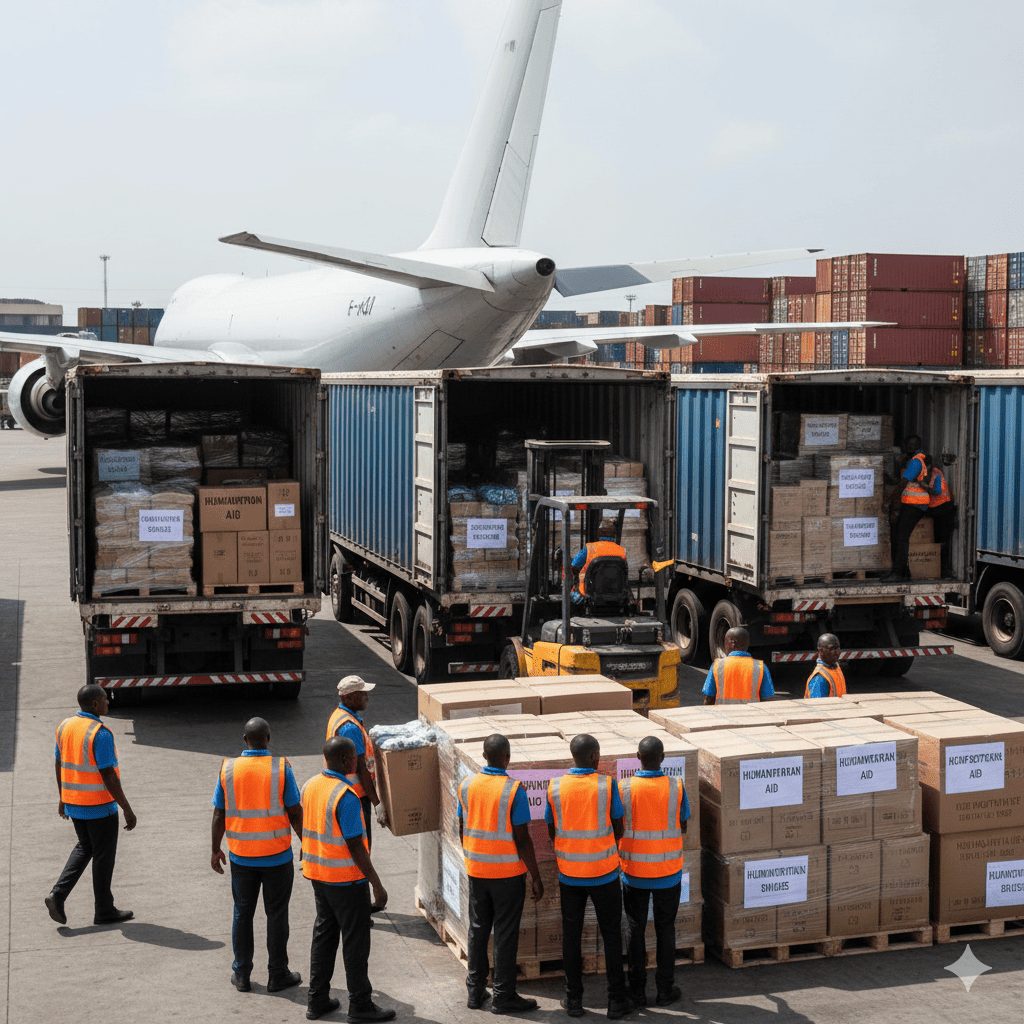
Humanitarian cargo plays a critical role in saving lives during emergencies, disasters, and conflicts. When crises strike, the fast and secure movement of relief goods becomes essential.
So, what is the meaning of humanitarian cargo, and how is it handled?
In this guide, we explain what humanitarian cargo is, examples of relief goods, how it is transported, and why experienced logistics companies like Delta Cargo Connections are essential for successful humanitarian operations—especially in regions such as Somalia, Congo, and Port Sudan.
What Is Humanitarian Cargo?
Humanitarian cargo refers to goods transported specifically for humanitarian aid and relief purposes, usually during emergencies, disasters, or conflicts.
These goods are intended to:
-
Save lives
-
Reduce human suffering
-
Support displaced or vulnerable populations
-
Restore basic living conditions
Humanitarian cargo is often transported by NGOs, UN agencies, governments, and international aid organizations.
Examples of Humanitarian Cargo and Relief Goods
Humanitarian cargo typically includes essential items such as:
Food and Nutrition Supplies
-
Rice, maize, wheat, flour
-
Cooking oil
-
High-energy food supplements
-
Infant and child nutrition products
Medical and Health Supplies
-
Medicines and vaccines
-
Medical equipment
-
First-aid kits
-
Personal protective equipment (PPE)
Shelter and Non-Food Items (NFIs)
-
Tents and tarpaulins
-
Blankets and mattresses
-
Clothing
-
Kitchen sets
Water, Sanitation, and Hygiene (WASH) Items
-
Water purification tablets
-
Hygiene kits
-
Sanitation equipment
Emergency and Relief Equipment
-
Generators
-
Communication equipment
-
Relief vehicles
-
Field hospitals
These goods are often time-sensitive and life-saving.
When Is Humanitarian Cargo Needed?
Humanitarian cargo is usually required during:
-
Armed conflict and war
-
Natural disasters (floods, droughts, earthquakes)
-
Disease outbreaks
-
Refugee and displacement crises
-
Food insecurity emergencies
Regions such as Somalia, the Democratic Republic of Congo (DRC), and Sudan frequently rely on humanitarian cargo to support affected communities.
How Humanitarian Cargo Is Transported
Transporting humanitarian cargo requires careful planning and expertise.
1. Air Freight for Humanitarian Cargo
Air transport is used for urgent and high-priority relief goods.
Best for:
-
Medical supplies
-
Emergency food aid
-
Time-critical relief items
Air freight is often routed through major hubs such as JKIA for onward delivery to conflict or disaster zones.
2. Sea Freight for Humanitarian Cargo
Sea freight is used for large-volume humanitarian shipments.
Best for:
-
Bulk food aid
-
Shelter materials
-
Vehicles and equipment
Cargo may arrive through ports before being transported inland.
3. Road Transport and Last-Mile Delivery
Road logistics ensures humanitarian cargo reaches final destinations, including remote and high-risk areas.
This stage is often the most challenging due to:
-
Poor infrastructure
-
Security risks
-
Border controls
Special Requirements for Humanitarian Cargo
Humanitarian cargo logistics is more complex than commercial shipping.
It requires:
-
Priority handling
-
Customs exemptions and duty-free processing
-
Special documentation
-
Coordination with governments and agencies
-
Security planning
-
Cold chain management (for medicines and vaccines)
Only experienced logistics companies can manage these requirements effectively.
Humanitarian Cargo vs Commercial Cargo
| Humanitarian Cargo | Commercial Cargo |
|---|---|
| Life-saving purpose | Profit-driven |
| Often duty-exempt | Subject to taxes & duties |
| Time-critical | Cost-focused |
| NGO / UN shipments | Private business shipments |
| Requires approvals | Standard clearance |
Understanding this difference is crucial for compliance.
Challenges in Humanitarian Cargo Logistics
Transporting humanitarian cargo comes with unique challenges:
-
Political instability
-
Security risks
-
Limited infrastructure
-
Border delays
-
Complex documentation
-
Coordination with multiple stakeholders
These challenges make professional humanitarian logistics essential.
Why Experience Matters in Humanitarian Logistics
Humanitarian operations cannot afford delays or errors.
An experienced logistics partner ensures:
-
Fast cargo clearance
-
Compliance with humanitarian regulations
-
Secure handling of sensitive goods
-
Reliable delivery to high-risk regions
Mistakes can cost lives.
Delta Cargo Connections and Humanitarian Cargo Operations
Delta Cargo Connections specializes in handling humanitarian cargo and relief goods across East and Central Africa.
Our Humanitarian Logistics Capabilities
-
Air freight and sea freight coordination
-
Clearing and forwarding for humanitarian shipments
-
Priority handling at JKIA and Mombasa Port
-
Cross-border logistics to Somalia, Congo, and Port Sudan
-
Secure road transport and last-mile delivery
-
Compliance with humanitarian regulations
We work closely with NGOs, aid agencies, and international partners to ensure relief goods reach those in need—on time and safely.
Importance of Humanitarian Cargo in Africa
Humanitarian cargo is vital in Africa due to:
-
Recurring droughts and floods
-
Conflict and displacement
-
Food insecurity
-
Health emergencies
Efficient logistics ensures aid reaches vulnerable communities quickly and effectively.
Final Thoughts
So, what is the meaning of humanitarian cargo?
It refers to life-saving goods transported to support communities affected by emergencies, disasters, and conflict.
Handling humanitarian cargo requires expertise, speed, compliance, and reliability. With experience in delivering relief goods to Somalia, Congo, and Port Sudan, Delta Cargo Connections remains a trusted partner for humanitarian logistics operations.
When lives depend on logistics, experience matters.
experienced Clearing and Forwarding Agents
We’re here to help
Get in touch with us today for expert clearing, forwarding, and comprehensive logistics solutions. We ensure smooth, hassle-free cargo movement with efficiency and professionalism. Let us handle your logistics needs.

continue reading
Related Posts
Kenya plays a strategic role in humanitarian operations across East and Central Africa. With its advanced logistics infrastructure, international airports, seaports, and road networks, the

Kenya is one of East Africa’s most important trade and logistics hubs. With major entry points like Jomo Kenyatta International Airport (JKIA) and the Port
A reliable logistic transport company is the backbone of modern trade. From moving goods locally to handling international cargo, transport logistics ensures products reach the